
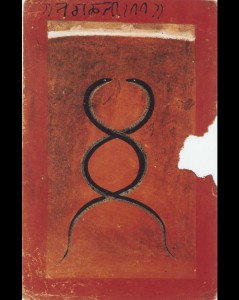
A Pair of Intertwined Serpents - Kundalini

Intertwined Twin Kundalini Serpents

KUNDALINI SERPENTS – The two serpents intertwine as a symbol of the relationship between two opposites: the sun and the moon, on the cosmic level, and within the sacred physiology of the subtle body, the solar nadi and lunar nadi, as they are described in the texts of Tantric Hinduism. The opposites manifest themselves in the cosmos and within the individual psyche, and they reflect the complementary aspects of the divinity, out of which all things flow. The two snakes in this image represent complementary forms of divine energy. The same forms are represented by the sun and the moon, the male and the female, heat and cold. Central in this symbolism is the notion of energy. In the Hindu worldview, the term for this energy is prana, which means “breathing forth.” It may refer to the Ultimate as the transcendent source of all life, to life in general, to the life force of an specific being, to respiration, to air, and to the life organs. It is the creative force that underlies and pervades all being. In this sense, prana is related to the Greek pneuma (“spirit”) and the Melanesian mana (“power”). All of these terms refer to an
Read More »

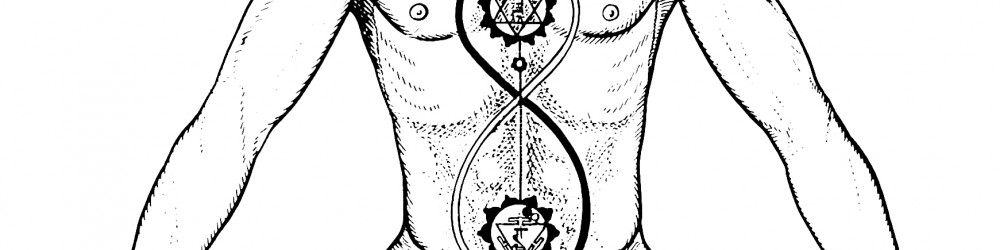
Solar and Lunar Channels in Kundalini Yoga

KUNDALINI YOGA – The essential alphabet of all Tantric lore is to be learned from the doctrine of the seven “circles” (chakras) or “lotuses” (padmas) of the kundalini system of yoga. (See fig. 306.) The long terminal ‘i’ added to the Sanskrit adjective kundalin, meaning “circular, spiral, coiling, winding,” makes a feminine noun signifying “snake,” the reference in the present context being to the figure of a coiled female serpent—a serpent goddess not of “gross” but of “subtle” substance—which is to be thought of as residing in a torpid, slumbering state in a subtle center, the first of the seven, near the base of the spine: the aim of the yoga then being to rouse this serpent, lift her head, and bring her up a subtle nerve or channel of the spine to the so-called “thousandpetalled lotus” (sahasrara) at the crown of the head. This axial stem or channel, which is named sushumna (“rich in happiness, highly blessed”), is flanked and crossed by two others: a white, known as ida (meaning “refreshment, libation; stream or flow of praise and worship”), winding upward from the left testicle to right nostril and associated with the cool, ambrosial, “lunar” energies of the psyche;

Read More »