Jung on the Ego and Archetype

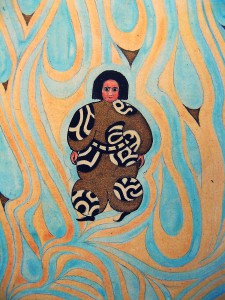
Jung on the Ego and Archetype – Archetypal statements are based upon instinctive predictions and have nothing to do with reason; they are neither rationally grounded or can they be banished by rational arguments. They have always been part of the world scene-representations collectives, as Levy-Bruhl rightly called them. Certainly the ego and its will have a part to lay in life but what the ego wills is subject in the highest degree to the interference, in ways the ego is usually unaware, of the autonomy and numinosity of archetypal processes. ( Carl Jung Memories Dreams and Reflections p. 353 )
Read More »

How to Produce Joy : Workshop

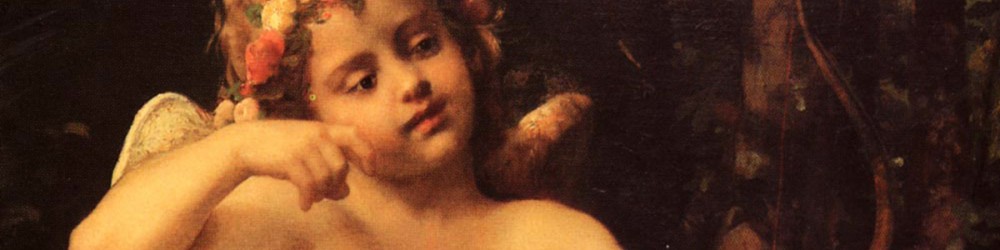
HOW TO PRODUCE JOY : The Myth of Eros & PsycheA workshop with : Howard Teich, Ph.D., Psychotherapist Saturday, September 22, 2012 (1-6PM)San Francisco Zen Conference Center / 308 Page St. With over 50 years as a psychotherapist, Howard Teich will guide you through this workshop through the inner alchemy of how to produce joy in every aspect of your life. For more information : Visit the Facebook Event Page To reserve, contact Camille :415-425-6515 / ocaramia@me.com / reserve online

Read More »
A Pair of Intertwined Serpents - Kundalini

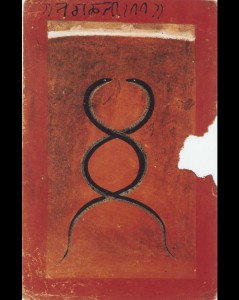
Intertwined Twin Kundalini Serpents

KUNDALINI SERPENTS – The two serpents intertwine as a symbol of the relationship between two opposites: the sun and the moon, on the cosmic level, and within the sacred physiology of the subtle body, the solar nadi and lunar nadi, as they are described in the texts of Tantric Hinduism. The opposites manifest themselves in the cosmos and within the individual psyche, and they reflect the complementary aspects of the divinity, out of which all things flow. The two snakes in this image represent complementary forms of divine energy. The same forms are represented by the sun and the moon, the male and the female, heat and cold. Central in this symbolism is the notion of energy. In the Hindu worldview, the term for this energy is prana, which means “breathing forth.” It may refer to the Ultimate as the transcendent source of all life, to life in general, to the life force of an specific being, to respiration, to air, and to the life organs. It is the creative force that underlies and pervades all being. In this sense, prana is related to the Greek pneuma (“spirit”) and the Melanesian mana (“power”). All of these terms refer to an

Read More »

Squaring the Circle

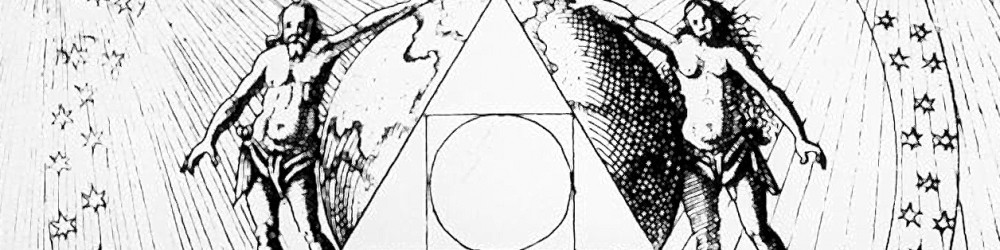
Squaring the circle was a problem that greatly exercised medieval minds. It is a symbol of the opus alchymicum, since it breaks down the original chaotic unity into the four elements and then combines them again in a higher unity. Unity is represented by a circle and the four elements by a square. The production of one from four is the result of a process of distillation and sublimation which takes the so-called “circular” form: the distillate is subjected to sundry distillations so that the “soul” or “spirit” shall be extracted in its purest state. The product is generally called the “quintessence,” though this is by no means the only name for the ever-hoped-for and never-to-be-discovered “One.” It has, as the alchemists say, a “thousand names,” like the prima materia. ( Carl Jung )

Read More »

Jung on the Realm of Eros

Regarding the realm of Eros – In classical times, when such things were understood, Eros was considered a god whose divinity transcended our human limits, and who therefore could neither be comprehended nor represented in any way. I might as many before me have attempted to do, venture an approach to this daimon, whose range of activity extends from the endless spaces of the heavens to the dark abyss of hell; but I falter before the task of finding the language which might adequately express the incalculable paradoxes of love. Eros is a kosmogonos, a creator and father-mother of all higher consciousness. …. In my medical experience and my life I have again and again been faced with the mystery of love, and have never been able to explain what it is. … No matter, no worse expresses the whole. To speak of partial aspects is always too much or too little, for only the whole is meaningful. Love “bears all things” and endures all things” (1 Cor. 13.7) These words say all there is to be said; nothing can be added to them. For we are in the deepest sense the victims and instruments of cosmogonic “love.” I put

Read More »

Jung on Archetypes as Ancestral Experiences

There is no human experience, nor would experience be possible at all without the intervention of a subjective aptitude.  What is this subjective aptitude?  Ultimately it consists of an innate psychic structure which allows man to have experiences of this kind.  Thus the whole nature of the human male presupposes woman, both physically and spiritually.  His system is tuned into woman from the start, just as it is prepared for a quite definite world where there is water, light, air, salt, carbohydrates, etc.  The form of the world into which he is born is already inborn in him as a virtual image.  Likewise parents, wife, children, birth, and death are inborn in him as virtual images, as psychic aptitudes.  These a priori categories have by nature a collective character; they are images of parents, wife, and children in general, and are not individual predestinations.  We must therefore think of these images as lacking in solid content, hence  as unconscious.  They only acquire solidity, influence, and eventual consciousness in the encounter with empirical facts which touch the unconscious aptitude and quicken it to life.  They are, in a sense, the deposits of all our ancestral experiences, but they are not the

Read More »

Jung on Alchemy

JUNG ON ALCHEMY – C.G. Jung’s research revealed to him that analytical psychology coincided with Alchemy. Jung states: “I had very soon seen that analytical psychology coincided in a most curious way with alchemy…  The experiences of the alchemists were, in a sense, my experiences, and their world was my world. This was of course, momentous discovery: I had stumbled upon the historical counterpart of my psychology of the unconscious. The possibility of comparison with alchemy, and the uninterrupted intellectual chain back to Gnosticism, gave substance to my psychology. When I pored over those old texts, everything fell into place: the fantasy-images, the empirical material I had gathered in my practice, and the conclusions I had drawn from it. I now began to understand what these psychic contents meant when seen in historical perspective.” ( C.G. Jung Psychology and Alchemy CW 12, pars. 345ff ) situs togeltoto slotrtp slotcerutu4dsitus totobo togelsitus totototo togelsitus togelsitus togelbo togelpam4dbento4dtoto togelsitus togelsitus togelbento4dsitus togelbandar totositus togelbo togelsitus totositus togelsitus togeltoto slotpam4ddaftar pam4ddaftar pam4dlogin bento4dcerutu4dcerutu4dcerutu4dsitus totobento4dsitus totositus totositus togelsitus togelsitus totositus togelsitus togelsitus totositus totositus totositus togelsitus togeltoto togelsitus togelsitus totositus togelsitus togel resmitoto slotsitus totositus togelsitus totositus togelsitus totositus totositus togelsitus toto slotcerutu4dsitus totocerutu4dtoto

Read More »

The Basic Structure of Alchemical Transformation

The basic structure of alchemical transformation is simple. It is as follows: The purpose is to create a transcendent, miraculous substance, with his among other symbolized the Philosophers’ Stone. The Elixir of Life, or the universal medicine. First, find the suitable material, the so-called prima materia. In fact, unless the prima materia was found was returned to it is undifferentiated state transformation could not happen. Then the prima materia is subject to a series of operations that will turn it into the Philosophers’ Stone …. psychologically the image corresponds to the creation of the ego out of the undifferentiated unconscious by the process of discriminating functions: thinking, emotions, sensation and intuition. Working on images in our work is working on the psyche and is the work of creating the Self (our unique identity.) Thus the work is to take the fixed, settled aspects of the personality that are rigid and static are reduced or led back to their original, undifferentiated conditions as a part of the process of psychic transformation. Rigid and developed aspects of the personality allow no change. They are solid, established, and sure of their rightness. Only the indefinite, fresh and conditional, the vulnerable and insecure, original

Read More »