Early-Dynastic-III-Caduceus

Axis Mundi

The axis mundi (also cosmic axis, world axis, world pillar, columna cerului, center of the world), in religion or mythology, is the world center and/or the connection between Heaven and Earth. As the celestial pole and geographic pole, it expresses a point of connection between sky and earth where the four compass directions meet. At this point travel and correspondence is made between higher and lower realms. Communication from lower realms may ascend to higher ones and blessings from higher realms may descend to lower ones and be disseminated to all. The spot functions as the omphalos (navel), the world’s point of beginning. Because the axis mundi is an idea that unites a number of concrete images, no contradiction exists in regarding multiple spots as “the center of the world”. The symbol can operate in a number of locales at once. The human body can express the symbol of world axis. Some of the more abstract Tree of Life representations, such as the Sefirot in Kabbalism and in the Chakra system recognized by Hinduism and Buddhism, merge with the concept of the human body as a pillar between heaven and earth. Disciplines such as Yoga and Tai Chi begin from
Read More »

Olmec Twins & Jaguar

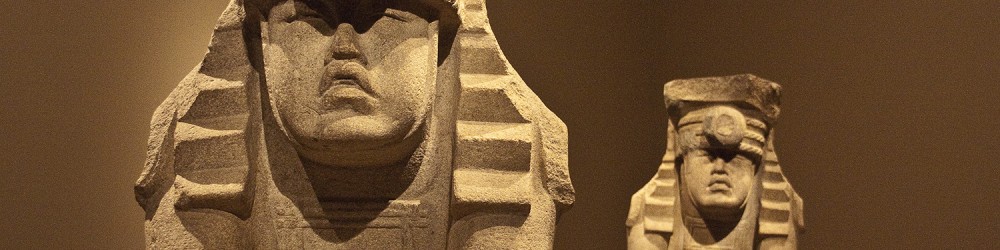
Three of the sculptures at El Azuzul shown in situ, as they were discovered. Olmec Twins & Jaguar – At El Azuzul another important monumental sculpture was found, a pair of twin males facing a Jaguar. This scene offers powerful image of duality and shamanic transformation as indicated by the postures of the twins. The first pair of statues, described as “some of the greatest masterpieces of Olmec art”, are nearly identical seated human figures. When discovered the two statues were facing east, one behind the other. Some researchers have suggested that these “twins” are forerunners of the Maya Hero Twins from the Popul Vuh, although their headdresses have led others to describe them as priests. The twin’s headdresses have been mutilated, probably to erase identifying insignia. Olmec Twins & Jaguar from the back These photographs of the three sculptures at El Azuzul shown in situ, are as they were discovered. Researchers believe that these sculptures had not been moved since Olmec times. This is a sculptural representation of two young Olmec rulers, twins, paying homage to a feline-jaguar deity. Each twin, like the figure in San Martín Pajapan Monument 1, is grasping a ceremonial bar with his right hand under

Read More »
chandra_moon-sky-1000x250

Chandra The Lunar Deity

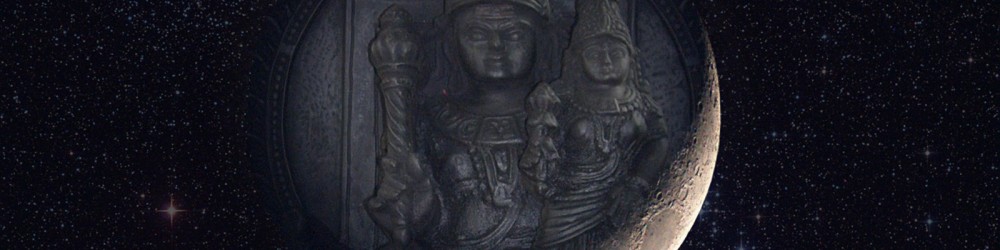
Chandra (Sanskrit चन्द्र lit. “shining”) is a lunar deity in Hinduism. Chandra is also identified with the Vedic Lunar deity Soma (lit. “juice”). The Soma name refers particularly to the juice of sap in the plants and thus makes the Moon the lord of plants and vegetation. On the inner level on consciousness, Chandra is the reflective light of the mind, and Soma is the sacred nectar of higher states of awareness. Chandra is also the word in Sanskrit, Hindi and other Indian languages for moon and means ‘shining’. Originally a feminine deity, representing the goddess or the female archetype in general, Chandra has been depicted in a male form in many sculptures and images as a symptom of patriarchal dominance in the the Hindu society. The name Chandra and Soma are still common names for girls in India. Chandra is described as young, beautiful, fair; two-armed and having in it’s hands a club and a lotus. Chandra rides on a chariot across the sky every night, pulled by ten white horses or an antelope. She is connected with dew, and as such, is representative of fertility which draws back to it’s origins as the mother goddess of the universe.

Read More »

Surya the Sun God

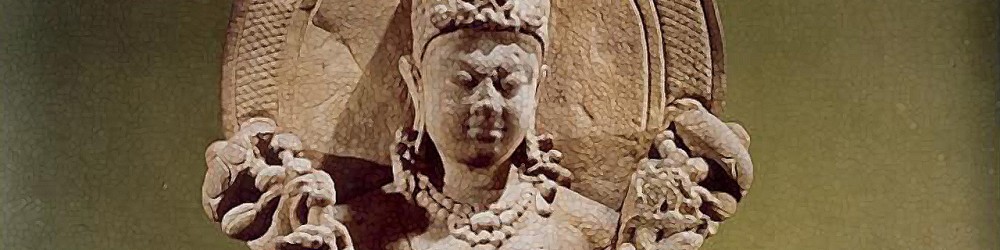
Surya the Sun God Surya the Sun God, is the celestial luminary embodied in human form as a Hindu deity. In his two upraised hands he holds the lotus, primary symbol of the sun’s creative force. In Vedic astrology Surya is considered a mild malefic on account of his hot, dry nature. Surya represents soul, will-power, fame, the eyes, general vitality, courage, kingship, father, highly placed persons and authority. Surya is the chief of the Navagraha, Indian “Classical planets” and important elements of Hindu astrology. He is often depicted riding a chariot harnessed by seven horses or one horse with seven heads, which represent the seven colours of the rainbow or the seven chakras. Surya as the Sun is worshiped at dawn by most Hindus and has many temples dedicated to him across India. Sometimes, Surya is depicted with two hands holding a lotus in both; sometimes he has four hands holding a lotus, chakra, a conch, and a mace. Interestingly, Surya’s two sons Shani and Yama are responsible for the judgment of human life. Shani gives us the results of one’s deeds through one’s life through appropriate punishments and rewards while Yama grants the results of one’s deeds after

Read More »

Horus : Egyptian God of the Sky

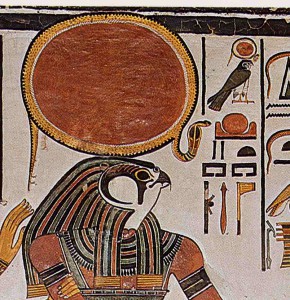
HORUS served many functions in the Egyptian pantheon, most notably being the god of the sky. Since Horus was also said to be the sky, he was considered to also contain the sun and moon. It became said that the sun was his right eye and the moon his left, and that they traversed the sky when he, a falcon, flew across it. Horus Later, the reason that the moon was not as bright as the sun was explained by a tale, known as the contestings of Horus and Set, originating as a metaphor for the conquest of Upper Egypt by Lower Egypt in about 3000 BC. In this tale, it was said that Set, the patron of Upper Egypt, and Horus, the patron of Lower Egypt, had battled for Egypt brutally, with neither side victorious, until eventually the gods sided with Horus. As Horus was the ultimate victor he became known as ‘Horus the Great’, or ‘Horus the Elder.’ In the struggle Set had lost a testicle, explaining why the desert, which Set represented, is infertile. Horus’ left eye had also been gouged out, then a new eye was created by part of Khonsu (the moon god) and was

Read More »

Yin Yang, Sun Moon

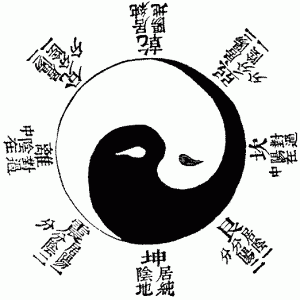
CHINA – The Chinese concepts of yin and yang represented shadow and sunshine, with the moon as ruler of yin and the sun as yang. The beliefs and rituals surrounding Chinese cosmology were always aimed at restoring the balance of lunar, or receptive energies, and solar, or active energies. INDIA – In India, the ultimate goal of hatha yoga—ha translating as sun, tha as moon, and yoga as union—is the spiritual practice of concentrating on the breath to achieve the marriage of the active solar and receptive lunar energies within the human body, be they male or female. Breath is also central to the Kundalini tradition of India. Here, the left nostril is believed to carry the lunar current, or Ida; the right nostril, the solar current, or Pingla, to achieve enlightenment. Practitioners of this tradition breathe these two energies, the solar and lunar, through each of the psychic chakras, or energy centers, of the body. Within the sacred tradition of alchemy, a prerequisite to male union with the opposite sex, is union within the male and within the female of the sun and the moon.  Read More ›› ( The Navaho and the Western Psyche : Where the Paths

Read More »
A Pair of Intertwined Serpents - Kundalini

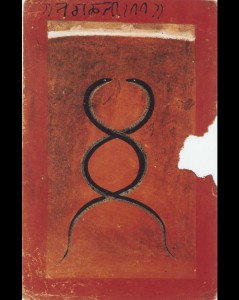
Intertwined Twin Kundalini Serpents

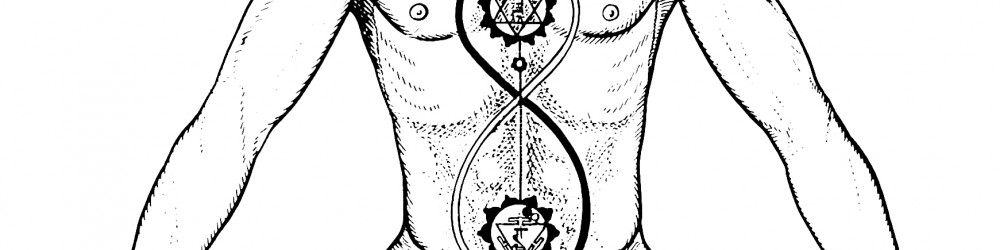
KUNDALINI SERPENTS – The two serpents intertwine as a symbol of the relationship between two opposites: the sun and the moon, on the cosmic level, and within the sacred physiology of the subtle body, the solar nadi and lunar nadi, as they are described in the texts of Tantric Hinduism. The opposites manifest themselves in the cosmos and within the individual psyche, and they reflect the complementary aspects of the divinity, out of which all things flow. The two snakes in this image represent complementary forms of divine energy. The same forms are represented by the sun and the moon, the male and the female, heat and cold. Central in this symbolism is the notion of energy. In the Hindu worldview, the term for this energy is prana, which means “breathing forth.” It may refer to the Ultimate as the transcendent source of all life, to life in general, to the life force of an specific being, to respiration, to air, and to the life organs. It is the creative force that underlies and pervades all being. In this sense, prana is related to the Greek pneuma (“spirit”) and the Melanesian mana (“power”). All of these terms refer to an

Read More »

Squaring the Circle

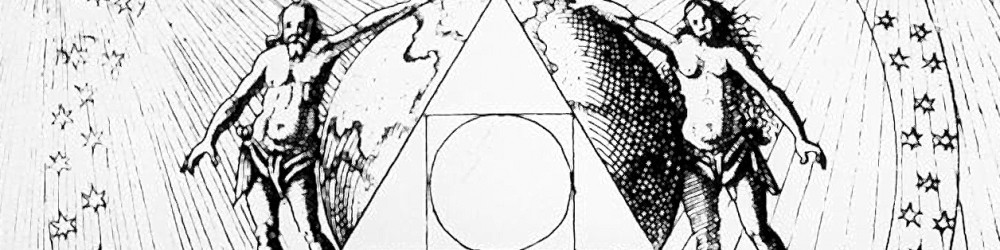
Squaring the circle was a problem that greatly exercised medieval minds. It is a symbol of the opus alchymicum, since it breaks down the original chaotic unity into the four elements and then combines them again in a higher unity. Unity is represented by a circle and the four elements by a square. The production of one from four is the result of a process of distillation and sublimation which takes the so-called “circular” form: the distillate is subjected to sundry distillations so that the “soul” or “spirit” shall be extracted in its purest state. The product is generally called the “quintessence,” though this is by no means the only name for the ever-hoped-for and never-to-be-discovered “One.” It has, as the alchemists say, a “thousand names,” like the prima materia. ( Carl Jung )

Read More »

Mythological Gods as Archetypes

MYTHOLOGICAL GODS – In our language a mythological god is an archetype and an archetype is always at the same time an instinctive pattern, an instinctive basis. Of the archetype of the mother, the biological basis would be motherhood, or of the archetype of the conjunctio, it would be sex. You could refer every god to a biological instinctive field; it is its meaning, or spiritual aspect. You could say that every instinctive dynamism has an archetypal image. Thus gods are representations of general complexes. Ares, or Mars, is an image of the instinct of aggression and self-defence in nature. In animal life, self-defence and aggression and fear dominate a whole part of life, and we are not exempt from this. Every god archetype is a dynamic, explosive load of dynamite and therefore uncontrolled. The gods are always a bit below the mark as compared with the human level. Even to the Greeks they were shocking, for they behaved like animals. The Stoics used philosophical arguments to explain it in a philosophical way. The role of the mother-goddess and such gods is to have measureless outbursts where they experience the greatest dynamism of life. ( Maria Louise von Franz 1972,

Read More »

Solar and Lunar Channels in Kundalini Yoga

KUNDALINI YOGA – The essential alphabet of all Tantric lore is to be learned from the doctrine of the seven “circles” (chakras) or “lotuses” (padmas) of the kundalini system of yoga. (See fig. 306.) The long terminal ‘i’ added to the Sanskrit adjective kundalin, meaning “circular, spiral, coiling, winding,” makes a feminine noun signifying “snake,” the reference in the present context being to the figure of a coiled female serpent—a serpent goddess not of “gross” but of “subtle” substance—which is to be thought of as residing in a torpid, slumbering state in a subtle center, the first of the seven, near the base of the spine: the aim of the yoga then being to rouse this serpent, lift her head, and bring her up a subtle nerve or channel of the spine to the so-called “thousandpetalled lotus” (sahasrara) at the crown of the head. This axial stem or channel, which is named sushumna (“rich in happiness, highly blessed”), is flanked and crossed by two others: a white, known as ida (meaning “refreshment, libation; stream or flow of praise and worship”), winding upward from the left testicle to right nostril and associated with the cool, ambrosial, “lunar” energies of the psyche;

Read More »