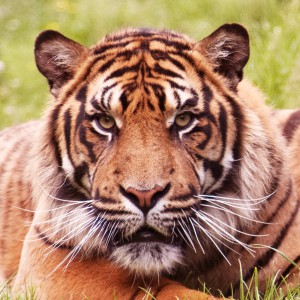
Tiger Dream Interpretation

ANONYMOUS DREAM SUBMISSION – TIGER DREAM INTERPRETATION A man of Asian descent has the following dream. “I was in a far away exotic place. Eventually I noticed these things on the floor. They looked like old washed up, mud cover tree trunk (medium sized) sitting there embedded in the floor. I looked closer at one, and it looked like a mud covered/dark stone tiger. Looking closer I realized it just didn’t look like one, it was a tiger, sort of half incarnated. Out of a bit of fear, I kicked sand from the floor on it’s face to see it was real. I felt bad I did that immediately thereafter. The tiger looked back at me. I am in a light blue colored room and I see two tigers and then notice that the room is full of tigers. One is bigger than the rest. There are two more big female tigers, each with two cubs. I make sure the door is closed. There is no lock. Door is flimsy poor Asia slider wood door with window panes. I decide to switch to a room upstairs. I walk out of the room, and realize I forget my phone and my key
Read More »
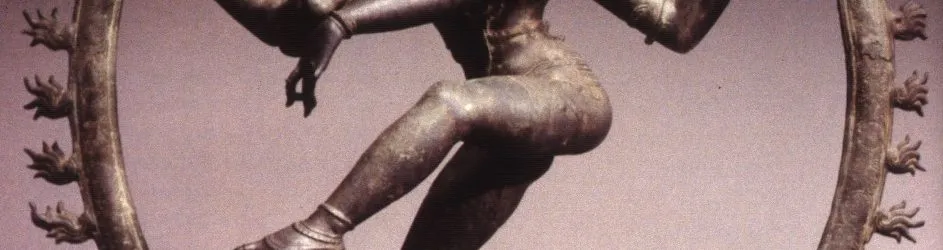
Shiva_as_Nataraja

Cosmic Dancer

Nataraja or Nataraj, is a depiction of the god Shiva as the cosmic dancer who performs his divine dance to destroy a weary universe and make preparations for the god Brahma to start the process of creation. A traditional Tamil concept, Shiva was first depicted as Nataraja in the famous Chola bronzes and sculptures of Chidambaram. The dance of Shiva in Tillai, the traditional name for Chidambaram, forms the motif for all the depictions of Shiva as Nataraja. He is also known as “Sabesan” which splits as “Sabayil aadum eesan” in Tamil which means “The Lord who dances on the dais“. The form is present in most Shiva temples in South India, and is the prime deity in the famous Thillai Nataraja Temple at Chidambaram. The sculpture is usually made in bronze, with Shiva dancing in an aureole of flames, lifting his left leg (or in rare cases, the right leg) and balancing over a demon or dwarf (Apasmara) who symbolizes ignorance. It is a well known sculptural symbol in India and popularly used as a symbol of Indian culture. The two most common forms of Shiva’s dance are the Lasya (the gentle form of dance), associated with the creation of the world, and the Tandava (the violent and dangerous dance), associated with the destruction of weary worldviews –

Read More »

Surrender to Your Dreams

Howard Teich talks about how to Surrender to your Dreams & Creativity, Don’t be afraid to Change in an interview by Cecilia Castelli on the radio show Lost in Transition on TradioV, November 6, 2012

Read More »

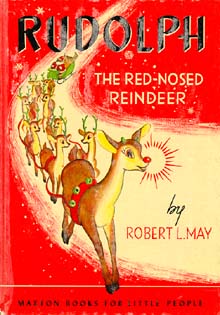
Rudolph the Red Nosed Reindeer and the Mayan Calendar

By  Howard Teich, Ph.D. Rudolph first appeared in a 1939 booklet written by Robert L. May and published by Montgomery Ward. Rudolph the Red Nosed Reindeer is a fictional reindeer with a glowing red nose. He is popularly known as “Santa’s 8th Reindeer and is the lead reindeer pulling Santa’s sleigh on Christmas Eve, bringing gifts to children who have been good. The luminosity of his nose is so great that it illuminates the team’s path through inclement winter weather. Rudolph’s glowing red nose made him a social outcast. The other reindeer harassed him mercilessly and excluded him from their fun because of this unusual trait. However, one Christmas Eve Santa Claus was having difficulty making his flight around the world because it was too foggy. When Santa went to Rudolph’s house to deliver his presents he noticed the glowing red nose in the darkened bedroom and decided it could serve as a makeshift lamp to guide his sleigh. He asked Rudolph if he would lead the sleigh for the rest of the night. Rudolph agreed, and was rewarded with recognition and acceptance amongst his fellow reindeer for his heroics that helped Santa Claus. Christmas is about love and fertility. Whether

Read More »

Mayan Twin Heros : Hunahpu and Xbalanque

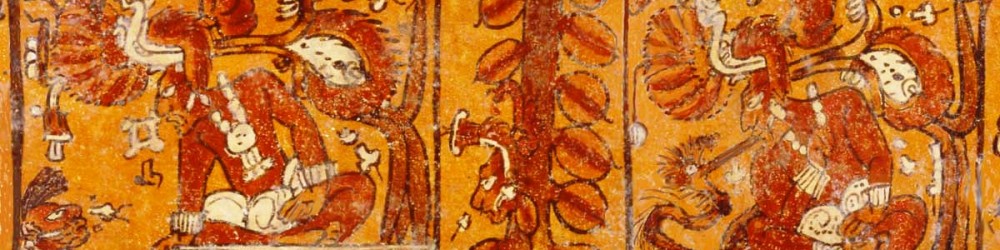
Hunahpu and Xbalanque By Four Arrows (aka Don Jacobs) All cultures have twin hero myths and most have one twin who is a “solar,” more aggressive and direct twin and the other is a “lunar” twin, more passive and reflective. In Western culture, the solar twin often kills the lunar twin or the lunar twin becomes unimportant in the culture. Cain and Able, Romulus and Remus, Jacob and Esau, Hercules and Iphecules, etc. In Indigenous twin hero stories, the two twins also represent these polar dualities, but they work as complementary pairs. Examples are many, such as the Navajo myth with Mexico origins about Child Born of the Water (Lunar) and Monster Slayer (Solar). The twins help one another to fight the monsters that symbolically keep us from being in balance, recognizes human relationship with complete natural world of which we are part. The Mayan Twin Hero Myth is a story to know and honor in preparation for the end of the particular calendar in which their twin heroes, Hunahpu and Xbalanque are depicted. Hunapu (Blowgun Hunter-Solar) and Xbalanque (Hidden Sun-Lunar) were trying to make a garden but every time they clearedaway the underbrush, the forest animals put it back again.

Read More »

Native American Moon Shield

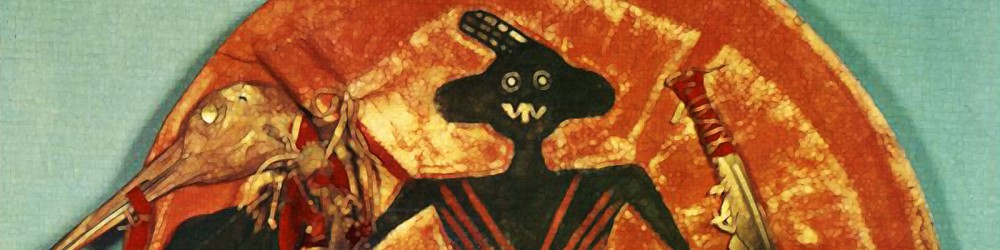
Usually, the moon is personified in myths as a female deity, but it is also known in some cultures as a male figure. Lunar symbolism brings together powers associated with the cyclical patterns in nature: the tide, the fertility cycle of a woman, the shedding of the snake’s skin. All of these repetitive modes of change, death and rebirth, are associated in lunar symbolism. The moon represents a force that expresses itself indirectly and through endurance rather than through direct aggression and oppression. It is the power of water to wear away the stone, the survival of the snake that disappears into the earth as it flees the hungry eagle, and the power of healing that comes through a connection with deep, vegetative forces in the psyche. The medicine shield of Chief Arapoosh of the Crow Indians offered physical and spiritual protection through the powers of the Moon, who is portrayed as he appeared to the chief during a vision quest. A deer tail and eagle feathers wrapped in red trade-cloth are fastened at one side of the shield. The head and neck of a crane are tied to the opposite side, together with crow or raven feathers, a length

Read More »

Vision Quest

What is a vision quest? In any social group, certain symbols come to serve as points of orientation around which the culture develops. The axis mundi, or cosmic center, can be a geographical site, such as a sacred mountain. It can also be an artifact, such as a pole that is carried from place to place but represents at all times the center of the world. Essential is the experience of being connected to the archetypal realm, the numinous source of being and value. Among nomadic tribes in North America, the vision has served a comparable function. Direct inner experience of the gods has been cultivated and has come to serve as an orientating and sanctifying force for both the Native American and his community. The interpretation of visions and the techniques for integrating the vision into the life of the person and the group are highly developed among these peoples. The vision quest can take place at any time, but it is usually undertaken first by a young Native American male as a rite of puberty. Often the boy will be separated from the group, left in a womblike hole in the ground, and surrounded by sacred things (a

Read More »
Early-Dynastic-III-Caduceus

Axis Mundi

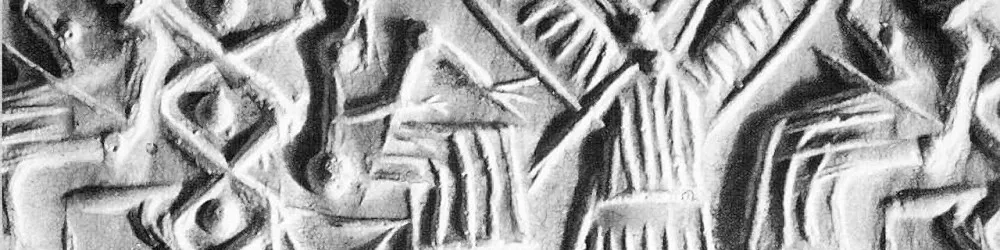
The axis mundi (also cosmic axis, world axis, world pillar, columna cerului, center of the world), in religion or mythology, is the world center and/or the connection between Heaven and Earth. As the celestial pole and geographic pole, it expresses a point of connection between sky and earth where the four compass directions meet. At this point travel and correspondence is made between higher and lower realms. Communication from lower realms may ascend to higher ones and blessings from higher realms may descend to lower ones and be disseminated to all. The spot functions as the omphalos (navel), the world’s point of beginning. Because the axis mundi is an idea that unites a number of concrete images, no contradiction exists in regarding multiple spots as “the center of the world”. The symbol can operate in a number of locales at once. The human body can express the symbol of world axis. Some of the more abstract Tree of Life representations, such as the Sefirot in Kabbalism and in the Chakra system recognized by Hinduism and Buddhism, merge with the concept of the human body as a pillar between heaven and earth. Disciplines such as Yoga and Tai Chi begin from

Read More »

Olmec Twins & Jaguar

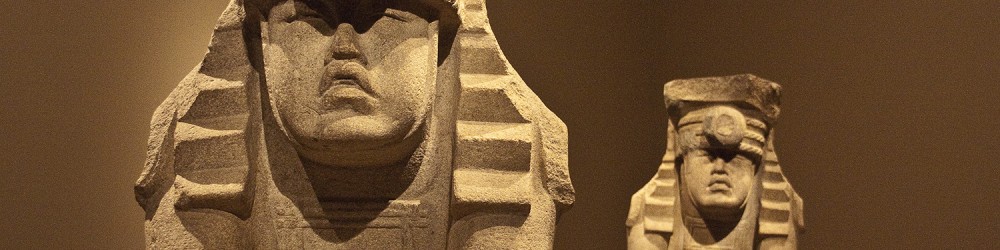
Three of the sculptures at El Azuzul shown in situ, as they were discovered. Olmec Twins & Jaguar – At El Azuzul another important monumental sculpture was found, a pair of twin males facing a Jaguar. This scene offers powerful image of duality and shamanic transformation as indicated by the postures of the twins. The first pair of statues, described as “some of the greatest masterpieces of Olmec art”, are nearly identical seated human figures. When discovered the two statues were facing east, one behind the other. Some researchers have suggested that these “twins” are forerunners of the Maya Hero Twins from the Popul Vuh, although their headdresses have led others to describe them as priests. The twin’s headdresses have been mutilated, probably to erase identifying insignia. Olmec Twins & Jaguar from the back These photographs of the three sculptures at El Azuzul shown in situ, are as they were discovered. Researchers believe that these sculptures had not been moved since Olmec times. This is a sculptural representation of two young Olmec rulers, twins, paying homage to a feline-jaguar deity. Each twin, like the figure in San Martín Pajapan Monument 1, is grasping a ceremonial bar with his right hand under

Read More »
chandra_moon-sky-1000x250

Chandra The Lunar Deity

Chandra (Sanskrit चन्द्र lit. “shining”) is a lunar deity in Hinduism. Chandra is also identified with the Vedic Lunar deity Soma (lit. “juice”). The Soma name refers particularly to the juice of sap in the plants and thus makes the Moon the lord of plants and vegetation. On the inner level on consciousness, Chandra is the reflective light of the mind, and Soma is the sacred nectar of higher states of awareness. Chandra is also the word in Sanskrit, Hindi and other Indian languages for moon and means ‘shining’. Originally a feminine deity, representing the goddess or the female archetype in general, Chandra has been depicted in a male form in many sculptures and images as a symptom of patriarchal dominance in the the Hindu society. The name Chandra and Soma are still common names for girls in India. Chandra is described as young, beautiful, fair; two-armed and having in it’s hands a club and a lotus. Chandra rides on a chariot across the sky every night, pulled by ten white horses or an antelope. She is connected with dew, and as such, is representative of fertility which draws back to it’s origins as the mother goddess of the universe.

Read More »