
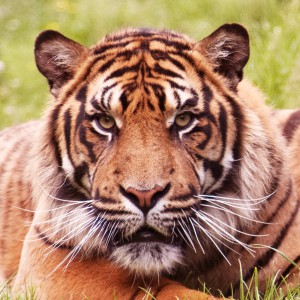
Tiger Dream Interpretation

ANONYMOUS DREAM SUBMISSION – TIGER DREAM INTERPRETATION A man of Asian descent has the following dream. “I was in a far away exotic place. Eventually I noticed these things on the floor. They looked like old washed up, mud cover tree trunk (medium sized) sitting there embedded in the floor. I looked closer at one, and it looked like a mud covered/dark stone tiger. Looking closer I realized it just didn’t look like one, it was a tiger, sort of half incarnated. Out of a bit of fear, I kicked sand from the floor on it’s face to see it was real. I felt bad I did that immediately thereafter. The tiger looked back at me. I am in a light blue colored room and I see two tigers and then notice that the room is full of tigers. One is bigger than the rest. There are two more big female tigers, each with two cubs. I make sure the door is closed. There is no lock. Door is flimsy poor Asia slider wood door with window panes. I decide to switch to a room upstairs. I walk out of the room, and realize I forget my phone and my key
Read More »
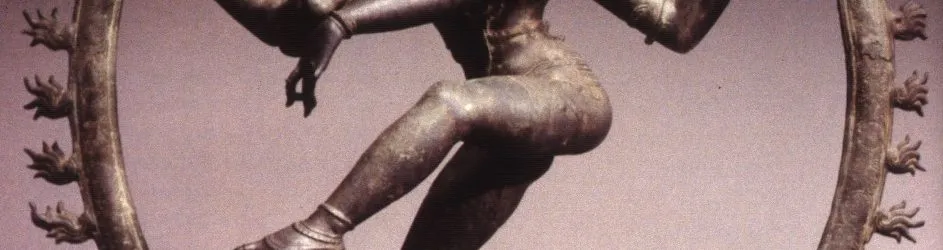
Shiva_as_Nataraja

Cosmic Dancer

Nataraja or Nataraj, is a depiction of the god Shiva as the cosmic dancer who performs his divine dance to destroy a weary universe and make preparations for the god Brahma to start the process of creation. A traditional Tamil concept, Shiva was first depicted as Nataraja in the famous Chola bronzes and sculptures of Chidambaram. The dance of Shiva in Tillai, the traditional name for Chidambaram, forms the motif for all the depictions of Shiva as Nataraja. He is also known as “Sabesan” which splits as “Sabayil aadum eesan” in Tamil which means “The Lord who dances on the dais“. The form is present in most Shiva temples in South India, and is the prime deity in the famous Thillai Nataraja Temple at Chidambaram. The sculpture is usually made in bronze, with Shiva dancing in an aureole of flames, lifting his left leg (or in rare cases, the right leg) and balancing over a demon or dwarf (Apasmara) who symbolizes ignorance. It is a well known sculptural symbol in India and popularly used as a symbol of Indian culture. The two most common forms of Shiva’s dance are the Lasya (the gentle form of dance), associated with the creation of the world, and the Tandava (the violent and dangerous dance), associated with the destruction of weary worldviews –

Read More »